Fūrinkazan 風林火山 these four Kanji literally mean wind, wood, fire, and mountain.
There were painted on the battle standard used by the great daimyo
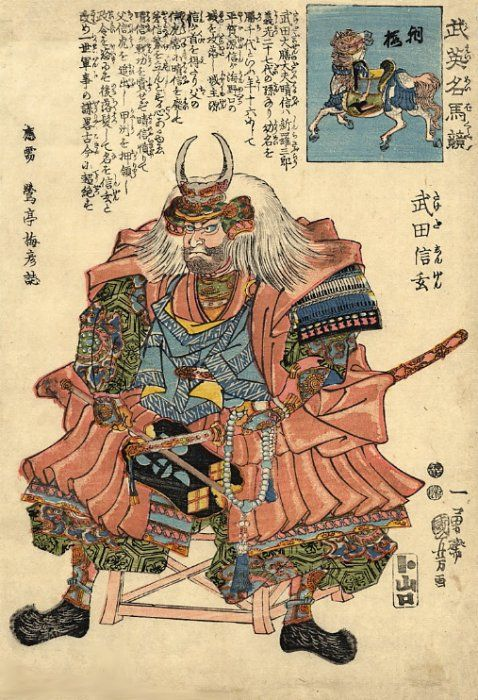
Takeda Shingen (1521 – 1573).
They are quoting chapter 7 of Sun Tzu’s The Art of War: “Move as swift as a wind, stay as silent as forest, attack as fierce as fire, undefeatable defense like a mountain.”
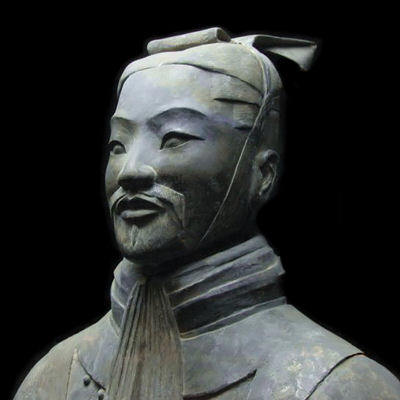
Sun Tzu (544 BC – 496 BC)
The original Chinese appears separated in two consecutive passages:
Chapter 7, passage 13: “故其疾如風,其徐如林“ Let your rapidity be that of the wind, your compactness that of the forest.
Chapter 7, passage 14: “侵掠如火,不動如山“ In raiding and plundering be like fire, be immovable like a mountain.
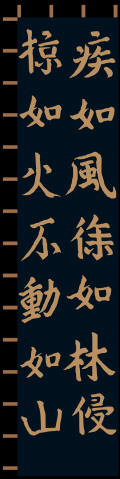
Fūrinkazan Takeda Shingen battle standard
Sun Tzu was a high-ranking Chinese officer and strategist of the Spring and Autumn Period from 771 until 476 BC.
The Art of War is composed of 13 chapters, each of which is devoted to one aspect of warfare, it is said to be the definitive work on military strategies and tactics of its time, and is still read for its military insights.
The Art of War is listed on the Marine Corps Professional Reading Program (formerly known as the Commandant’s Reading List). It is recommended reading for all United States Military Intelligence personnel and is required reading for all CIA officers.
The Art of War has also been applied to business and managerial strategies – and is recommended reading at most business schools.
The Art of War has been the subject of various law books and legal articles on the trial process, including negotiation tactics and trial strategy.